Thursday, July 13, 2006

Telekinesis: A Moving Story


How would you like to move objects with just your own brainpower? Scientists at Cyberkinetics have developed a "neuromotor prosthesis", a computer chip that is implanted into the human brain that can translate thoughts into action. So far, one paralyzed patient has learned to draw simple shapes, play a video game, and adjust the channel/volume on a television, using only his thoughts. One can imagine great promise for this new technology that could bring greater independence and safety for paralyzed individuals, with possibility of controlling all kinds of electronic devices with just a thought.

Saturday, July 08, 2006

Here's Lookin' at You, Kid


Are you the sort of person who can "forget a face"? Prosopagnosia, or face blindess, is the inability to distinguish between different faces (except the most familiar ones). Those afflicted try to compensate for their confusion by focusing on details of voice, gait, clothing or hair color to identify people. A German research group, headed by Dr. Ingo Kennerknecht of the Institute for Human Genetics at the University of Muenster, has discovered that face blindness can run in families and appears to have a hereditary component.

Now, who did you say you were again?

Thursday, July 06, 2006

Hawking Science


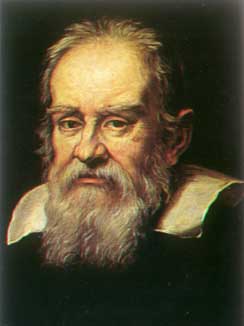
"I didn't fancy the thought of being handed over to the Inquisition, like Galileo"
~Stephen Hawking joking about a comment by Pope John Paul II who stated that scientists should not study the origins of the universe, as it was "G-d's work".

Tuesday, July 04, 2006

Stem Cells Behaving Badly


What do cancer cells and the developing embryo have in common? The answer is "a whole lotta genes"! My own work and those of my colleagues in the stem cell field show that there are a number of similarities between cancer and embryos. It seems that some cancers--leukemias, brain tumors, and eye tumors show subsets of stem cells that resemble cells from embryos. This is important because these "cancer stem cells" are the ones believed to be responsible for spreading tumors to distant sites and resisting chemotherapy drugs. It only takes one cancer stem cell behaving badly to propagate tumors that will not respond to chemo. By studying the behavior of these cancer stem cells, we can develop new treatments to kill tumors more effectively.

Food for thought: If there are stem cells in tumors that have the potential to develop into a human being, are the fundamentalists going to argue against surgical removal of malignant tumors in order to save the "potential human life" therein?

Saturday, July 01, 2006

A Cross to Bear


Published: July 1, 2006

ROME, June 30 — Scientists who engage in stem cell research using human embryos should be subject to excommunication from the Roman Catholic Church, according to a senior Vatican official.

Cardinal Alfonso López Trujillo, who heads the group that proposes family-related policy for the church, said in an interview with the Catholic weekly Famiglia Cristiana published Thursday that stem cell researchers should be punished in the same way as women who have abortions and doctors who perform them.

"Destroying an embryo is equivalent to abortion," said the cardinal. "Excommunication is valid for the women, the doctors and researchers who destroy embryos."

It was unclear if the pope supported the position, and the Vatican did not return calls for comment. But such blunt remarks from a powerful cardinal just a week before the church convenes a meeting to discuss the topic could foreshadow a hardening of Vatican policy on the issue, experts said.

Monday, June 26, 2006

International Society for Stem Cell Research


I'm off to Toronto on Wednesday for the annual meeting of the International Society for Stem Cell Research. It's always an interesting few days of scientific exchange, networking and a bit of fun. On Wednesday evening, there's a public forum on stem cell research, which is always well-attended. The exhibitors will provide us with free tote bags, pens, mouse pads, and plush animals.

But I'm especially interested in our keynote speaker, Dr. John Polanyi. It should be interesting!:


Nobel Laureate John Polanyi is a faculty member in the chemistry department at the University of Toronto. His research is on molecular motions in chemical reactions in gases and surfaces. He was awarded the Nobel Prize in Chemistry in 1986.

Polanyi is a fellow of the Royal Societies of Canada (F.R.S.C.), of London (F.R.S.) and of Edinburgh (F.R.S.E.), and of the American Academy of Arts and Sciences, the U.S. National Academy of Sciences, the Pontifical Academy of Rome, and the Russian Academy of Sciences. He is a member of the Queen’s Privy Council for Canada (P.C.) and a Companion of the Order of Canada (C.C.).

He was a founding member of both the Committee on Scholarly Freedom of the Royal Society and the Canadian Committee for Scientists and Scholars, an international human rights organization of which he is president. Additionally he was the founding chair of the Canadian Pugwash Group in 1960, and has been active for 40 years in International Pugwash. He has written extensively on science policy, the control of armaments and peacekeeping. He is co-editor of a book, The Dangers of Nuclear War, and was a participant in the recent Canada 21 study of a 21st century defense posture for Canada. He was co-chair (with Sir Brian Urquhart) of the Department of Foreign Affairs International Consultative Committee on a Rapid Response Capability for the United Nations.

Thursday, June 22, 2006

The Plagiarism Story-- A Happy Ending


Back in March, I told you about a group in India that had plagiarized an entire article of mine and republished it in another journal. It was a cut-and-paste job of the worst kind. They not only copied my text, but the actual figures, as well.

After over two months, there is finally an update: The plagiarized article has been retracted. Three of the four plagiarists sent me an apology, stating that they were very surprised to find out that the fourth author had done such a terrible thing. When I asked about an apology from the fourth author, there was no further response. All four authors are banned from submitting articles to the journal until further notice. The case has been sent to the Indian Ophthalmological Society for further review.

Meanwhile, this story has been a great ice-breaker at the stem cell conferences!


Monday, June 19, 2006

Designer Genes


What about a test that can screen an embryo for hundreds of potential genetic mutations? Some may consider this a scary development. I think it goes a long way toward preventing a number of devastating inherited diseases...

LONDON, June 19 (UPI) -- A revolutionary test developed by British scientists will allow human embryos to be screened for thousands of genetic mutations before implantation. Known as pre-implantation genetic haplotyping, the technique dramatically reduces the risk of passing on inherited diseases, according to a report Monday in The London Times. Current methods permit screening for about 200 inherited defects but the new procedure developed at Guy's and St Thomas' Hospital in London will work for thousands of heritable conditions, most of which are too rare or complicated to be pinpointed by existing means. It will also help families at risk of diseases that usually afflict only boys, such as Duchenne muscular dystrophy and hemophilia. Professor Peter Braude, who supervised the research team, said the test would give thousands more couples that carry genetic illnesses the chance to have a healthy baby.
www.sciencedaily.com

Thursday, June 15, 2006

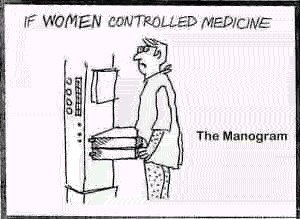
Keeping Abreast...


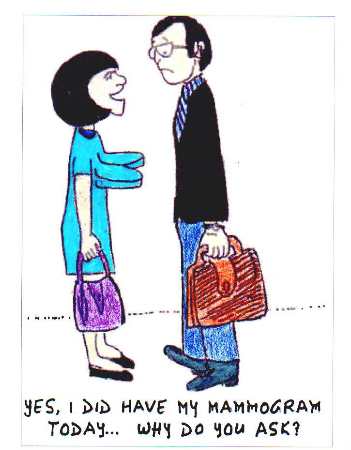
It's time for my annual mammogram tomorrow. Wish me luck!

Update: After much smooshing and prodding, I was sent away with a clean bill of health!


Wednesday, June 14, 2006

I Got Rhythm...


LONDON, June 13 (UPI) -- A British philosopher at the London School of Economics is drawing criticism from abortion opponents by opposing the "rhythm method," a report says. The New York Times said Luc Bovens argues in the Journal of Medical Ethics that couples who use the rhythm method to avoid pregnancy may be more at risk of producing underdeveloped embryos.

The rhythm method refers to the practice of couples preventing pregnancy by avoiding sex during the woman's most fertile time of the month. If this is correct, he writes, "millions of rhythm method cycles per year globally depend for their success on massive embryonic death," the Times said.

Bovens asserts that those concerned about early embryonic death should be just as worried about the rhythm method as they would be over other forms of contraception. Bovens's comments have drawn controversy in the United States and Britain from abortion opponents who advocate the rhythm method, or what is commonly known as natural family planning, the Times said.

Fertility experts say that although there are implications to its validity, there is little evidence to support Bovens's assumption.


Isn't it interesting when the fundies' faith in "the rhythm method" is questioned? What if Luc Boven's theory is true and the rhythm method leads to more miscarriages? Will the next step will be to advocate abstinent marriages? Oy!


Tuesday, June 13, 2006

Tonight, Dear. I Have a Headache.


From ScienceDaily.com:

"Our study suggests that sexual desire and migraine headaches may be influenced by the same brain chemical," said Timothy Houle, Ph.D., lead author and research assistant professor of anesthesiology. "The results support the idea that migraine, as a syndrome, is associated with other common phenomena. Understanding of this link will help us to better understand the nature of migraine and perhaps lead to improved treatment."

The research, involving 68 young adults from Chicago, will appear in an upcoming issue of Headache, published by the American Headache Society, and already is available on line.

The objective of the study was to examine the relationship between migraine headache and self-reported sexual desire. There is evidence of a complex relationship between sexual activity and headache. Both sexual desire and migraine headache have been linked to levels of serotonin, a brain chemical that also plays a role in depression. An excess of serotonin may be associated with decreased libido, and migraine sufferers are reported to have low system levels of the brain chemical. Serotonin has also been found to play a role in migraine attacks.

"Considering the circumstantial evidence linking both migraine and sexual desire to serotonin, we wanted to explore whether the two phenomena are actually related," said Houle.

The researchers hypothesized that abnormalities in the serotonin systems of migraine sufferers may influence their sexual desire. Because high levels of serotonin are associated with low sexual desire, and migraine sufferers have low levels of the chemical, it was predicted that they would report higher levels of sex drive.

The study involved 68 participants who reported having at least 10 headaches a year. Their mean age was 24 years. Participants underwent interviews to diagnose their headache type -- either migraine or tension -- and filled out a 14-item questionnaire to measure sexual desire.

Males reported levels of sexual desire that were 24 percent higher than females. Migraine sufferers reported levels of sexual desire that were 20 percent higher than those suffering from tension headaches. Females with migraines had levels of sexual desire similar to males who had tension headaches.

"The study demonstrated that migraine patients in general may experience higher levels of sexual desire than others," said Houle. "They appeared to be aware of this, rating their sex drive as being higher than others their age and gender."

He said the results suggest that a serotonin link may be implicated in both migraine headaches and sexual desire.

"This opens the door to consider other phenomena that have a similar neurochemical basis," he said. For example, there is an increased prevalence of depression in people with migraine, which is also theorized to be modulated by serotonin.

Houle said future research should focus on whether a cluster of migraine characteristics or symptoms can serve as markers of an altered serotonin system. Although the current study was not able to address whether the link may apply to middle-age or older adults with migraines, Houle said the finding appears to be quite general and is likely to be found in older patients as well.

Co-researchers were Lara K. Dhingra, Ph.D., from Memorial Sloan-Kettering Cancer Center, Thomas A. Remble, M.A., from Rush University Medical Center, Lori A. Rokicki, Ph.D., in private practice in Toledo, Ohio, and Donald B. Penzien, Ph.D., from the University of Mississippi Medical Center.

Monday, June 12, 2006

Wednesday, June 07, 2006

DNA Shoah Project


There's a fascinating project designed to identify Jewish victims of the Holocaust. The DNA Shoah project, founded by Syd Mandelbaum and Michael Hammer, is a DNA database of those who lost loved ones in the Holocaust. DNA from the database can be compared with human remains found recently in Poland and Germany. The database will also be used to help reunite Holocaust orphans, who were sent abroad during the war, with other family members who survived.

Once again, we see the power of DNA.

http://www.dnashoah.info

Sunday, June 04, 2006

Win, Place or Show?


Idaho Gem and Idaho Star are identical cloned mules. They were created from a fetal sibling of a former champion racing mule named Taz. Although they share the same DNA, the two clones have trained separately for two years. They are going to be racing head-to-head today in a test of nature vs. nurture. Which one will win? Will they tie? It should be interesting!

Update:
Idaho Gem took third place and Idaho Star finished seventh in a 350-yard (meter) race against six naturally bred three-year-old mules at the Winnemucca Mule Race, Show & Draft Horse Challenge in Winnemucca, Nevada.

New link:
http://tinyurl.com/mrdhv

Friday, June 02, 2006

Political Science


Do you have an editorial cartoon idea related to scientific integrity (like the one above, for example)? If so, send your entries to the following website:


http://www.ucsusa.org/scientific_integrity/science_idol/

Tuesday, May 30, 2006

SEOUL Mate

Behold, a female robot created in Korea:

"EveR-1 is designed to resemble a Korean female in her early 20s, according to a KITECH press release. Fifteen motors underneath her silicon skin allow her to express a limited range of emotions, and a 400-word vocabulary enables her to hold a simple conversation.

The android weighs 110 pounds (50 kilograms) and would stand 5 feet, 3 inches (160 centimeters) tall—if she could stand. EveR-1 can move her arms and hands, but her lower half is immobile."

http://tinyurl.com/ld4pn


Saturday, May 27, 2006

Rationalizations of a Chocoholic


WHEELING, W.Va., May 25 (UPI) -- A West Virginia professor has good news for chocoholics -- eating chocolate improves memory, reaction time and cognitive ability.

Dr. Bryan Raudenbush of Wheeling Jesuit University led the study, "Effects of Chocolate Consumption on Enhancing Cognitive Performance," Reliable Plant reported. He found that subjects who had consumed either milk chocolate or dark chocolate 15 minutes before they were tested performed better than those given carob or nothing at all.

"These findings provide support for nutrient release via chocolate consumption to enhance cognitive performance," Raudenbush said. He plans to present his findings at a professional conference this summer.


As if we needed any more reasons to eat chocolate....
I spoke with a nutritionist this week-end who eats chocolate every day. She considers chocolate as "the tip of the food pyramid. But without the tip, it wouldn't be a pyramid!".

Friday, May 26, 2006

A Blistering Attack on Shingles


WASHINGTON, May 26 (UPI) -- The U.S. Food and Drug Administration has licensed a new Merck & Co. vaccine that reduces the risk of shingles.

Zostavax is licensed for those over age 60. About one-fifth of the population is believed to develop shingles.

The disease of the nervous system is caused by the chicken pox virus, varicella-zoster, which lies dormant in the nervous system for decades after an attack. Symptoms include painful blisters that can last for weeks.

"This vaccine gives health care providers an important tool that can help prevent an illness that affects many older Americans and often results in significant chronic pain," said Dr. Jesse L. Goodman -- Director of the FDA's Center for Biologics Evaluation and Research -- in an FDA news release.

Zostavax was tested in a trial involving 38,000 subjects and found to reduce the risk of shingles by about half in those over 60. The risk reduction was greatest for those age 60 to 69.


Since people who get shingles have already been infected with the varicella zoster virus, this vaccine seems to inhibit the virus from coming back out of dormancy.

Thursday, May 25, 2006

Monkey Business

There's a story in the Science section of the New York Times today that describes an exciting new discovery in AIDS research. It seems that the primate version of the HIV virus (SIV) has been found in chimp droppings in the forests of Cameroon, Africa. This is important because, for the first time, the virus has been discovered in chimps outside of the laboratory, in their natural habitat. The prevailing theory of chimp-to-human transfer of SIV/HIV is that it occurred in West-Central Africa. African hunters ate infected monkeys and eventually carried the virus to Kinshasa, Congo, where the first human case of AIDS was documented in 1959. The virus spread from there to cause havoc worldwide.
http://tinyurl.com/n94lt

More studies need to be done to fully convince the conspiracy theorists that HIV was not a government program designed to wipe out specific segments of the US population.
http://tinyurl.com/hph3o