Friday, May 19, 2006

No Guts, No Glory


Why fret about this?


Mad Cow Threatens Violin Strings
ROME, May 19 (UPI) -- Italian violin string-makers say it makes no sense to ban the use of animal guts for their industry. The European Union has banned offal and other animal parts to stem the spread of mad cow disease. "This ban makes no sense. You can't eat a violin string," Mimo Peruffo of the Aquila company, the top Italian string-maker, told the Italian news agency ANSA. He said violin strings would pose no danger to humans because they are covered with silver-coated copper wire in the production process. Peruffo said he has been forced to turn to Argentina for raw materials -- the only country deemed danger-free by the EU.

Thursday, May 18, 2006

At Your Cervix...


There is a new cervical cancer vaccine called Gardasil that is awaiting FDA approval. The vaccine works by immunizing women against the strains of human papilloma virus that are associated with cervical cancer. The vaccine is also being tested in men. In clinical trials, Gardasil was successful in preventing 100 per cent of cases of high-grade pre-cancer and non-invasive cancer associated with human papillomavirus (HPV) strains Type 16 and 18, which cause cervical cancer. It could potentially prevent 350,000 cases of cancer over the next 20 years.

Conservative groups have opposed the vaccine with the concern that it would encourage sexual promiscuity, as seen in this Campus Progress article http://tinyurl.com/rdgrj:

Shawna Peays, who works at an abstinence-advocacy organization called the Medical Institute for Sexual Health in Austin, Texas, says the vaccine is hardly a safeguard and could confuse teens who think it protects against all HPV strains and Sexually Transmitted Infections.

“The HPV vaccine would not provide protection against the 20+ other known sexually transmitted infections…nor would it prevent nonmarital [sic] pregnancy,” she wrote in an e-mail. “The Medical Institute will continue to strongly promote abstinence for unmarried teenagers as the healthiest lifestyle choice.”

Tony Perkins, president of the Family Research Council (FRC), an organization that “champions marriage and family as the foundation of civilization,” said in a recently published Fortune article that he won’t let his daughter get the shots because it sends the wrong message about pre-marital sex.


Mr. Perkins, what sort of message does it send to your daughter about the right to self-determination over one's own body and the right to benefit from life-saving medical advances? If your daughter engages in premarital sex, even once, do you want to condemn her to a potentially fatal disease as a consequence? It seems just a bit harsh, doesn't it?

Tuesday, May 16, 2006

Nothing to sneeze at...


Gay or Straight? The Nose Knows

By Laura Blackburn

ScienceNOW Daily News
9 May 2006

When it comes to responding to pheromonelike chemical signals, lesbian women are much more like heterosexual men than their straight counterparts, according to a new study. The findings could lead to new insights into the neural basis of sexual preference and behavior, say the researchers.

Pheromones are the ultimate aphrodisiacs. Many animals use the sex-specific scents to sniff out their partner of choice. The pheromones of female moths, for example, can attract a mate from several kilometers away. Whether the substances also play a role in human mating is less clear. Potential candidates include AND, a progesterone-derived molecule found in men's sweat, and EST, which is related to estrogen and found in pregnant women's urine. But neither has yet met the strict criteria that would define it as a pheromone.

Nevertheless, the compounds do seem to have sex-specific effects. In response to a whiff of AND, heterosexual women and homosexual men respond in the same way: The front part of their brain's hypothalamus, which plays a role in sexual behavior, starts to rev up. Heterosexual men, on the other hand, don't respond to AND. For them, EST hits the spot (ScienceNOW, 9 May 2005).

Neurologist Ivanka Savic-Berglund of the Karolinska Institute in Stockholm, Sweden, and colleagues wondered how lesbian women would respond to these substances. The team gave 12 lesbians a sniff of AND and EST and used positron emission tomography to measure blood flow in their brains. They then compared these results to those obtained from their previous studies on heterosexual men and women.

Much like heterosexual men, lesbians responded to EST but not AND. The way that EST activated the hypothalamus, however, was not identical in the two groups. In other words, the brain's response to female compound differed slightly depending on whether a man or woman was doing the smelling. This contrasts with the results of the previous study, in which the brain's response to a male hormone (AND) was almost exactly the same, regardless of the smeller. Thus, says Savic-Berglund, while gay men and straight women have an essentially identical response to an attractive hormone, gay women and straight men differ slightly in this response. This discrepancy may indicate that homosexuality does not work the same way in men and women--at least on a neural level, the team reports online this week in Proceedings of the National Academy of Sciences.

"This is a very nice study, with clear findings" says neuroscientist Sandra Witelson of the de Groote Medical School at McMaster University in Ontario, Canada. Further research will allow scientists to unravel whether the relationship between sexual preference and brain response is learned or "hard-wired" into the brain and will give valuable insight into the differences between male and female homosexuality, she says.


Saturday, May 13, 2006

Take that to the bank!


Genetic Savings & Clone is a company that will clone your favorite kitty for $32,000.

http://www.savingsandclone.com/services/cat_cloning.html

A cat clone is identical in physical appearance to the donor cat, but has not shared the same life experiences, eaten the same catnip, chased the same mice, nor spent 15 years in your home. Those who are looking for an exact replacement of a dearly departed cat may be disappointed.

In my opinion, that extra $32,000 would be better spent on something else.

Monday, May 08, 2006

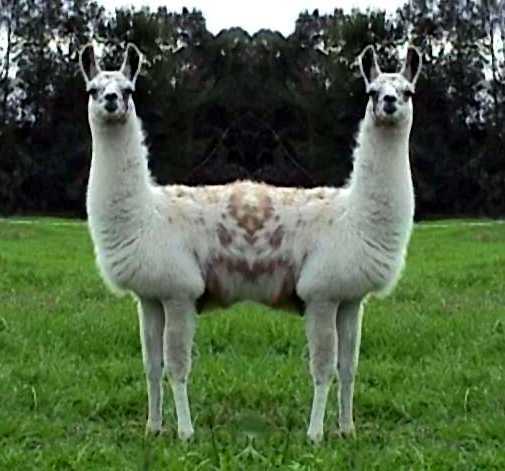
Seeing Double?


Who said there's no such thing as a push-me-pull-you? And is it just me, or do you see a biblical image where the hindquarters connect?

Friday, May 05, 2006

Chimeras--The "Yuck" Factor

The Arezzo Chimera, 4th century B.C.

A chimera is a single hybrid organism composed of cells that have different embryonic origins (Nagy and Rossant 2001). For example, a human cardiac patient receiving a pig valve replacement could be considered a chimera, of sorts.

I was inspired by a recent ethics lecture by Dr.
Robert Streiffer from the University of Wisconsin, Madison. He discussed attitudes toward chimeras, including the fears that some people have about the technology going too far.


Pictured above, is an experiment in which investigators tried to fabricate an external human ear using the mouse as an "incubator" (Cao, et al. 1997). It looks fairly gruesome at face value (pun intended, as usual). Hence, it has a "yuck factor" that may make it unpalatable to some people, simply due to its appearance. Yet, when you consider that this experiment may lead to novel ways to repair tissue damage in humans, one would hope that the potential benefits would outweigh the yuckiness.

Aural atresia, from e-medicine.com

Dr. Streiffer put it very simply: "Given a choice between a mouse with something on its back that looks like a human ear, and a small child with no external ear at all, the only decent choice is the one that favors the child."

Monday, May 01, 2006

Laptop, anyone?


The caption is a bit small to read on this photo from the early 1950's. But it says that "Scientists from the RAND corporation have created this model to illustrate how a "home computer" will look like in the year 2004. However, the needed technology will not be economically feasible for the average home. Also, the scientists readily admit that the computer will require not yet invented technology to actually work, but 50 years from now scientific progress is expected to solve these problems. With teletype interface and the Fortran language, the computer will be easy to use."

It's so cute, you just want to pinch it....


Saturday, April 29, 2006

Orphan Diseases


Have you ever heard of Pompe Disease? It has nothing to do with the town in Italy that was destroyed by the volcanic eruption of Mt Vesuvius in 79 AD. Rather, it is a very debilitating, often fatal, glycogen storage disease that is not familiar to most of the general public. There are a lot of these so-called "orphan diseases", that are generally rare and not in the public eye. Yet, these diseases cause heartache and suffering for thousands of people, just as surely as the more common ailments, such as cancer and stroke.

One of the biggest problems facing those afflicted with an orphan disease is that there is little incentive for pharmaceutical companies to develop drugs to treat these diseases, due to the limited market potential. If your bottom line is money, why develop a drug that will be purchased by only a couple of hundred people? Yet, if you are one of the people affected by Mowat-Wilson Syndrome, Canal-Smith Syndrome or Hermansky Pudlak Syndrome, why should your plight be ignored?

Thank goodness for NORD:
" The National Organization for Rare Disorders (NORD), a 501(c)3 organization, is a unique federation of voluntary health organizations dedicated to helping people with rare "orphan" diseases and assisting the organizations that serve them. NORD is committed to the identification, treatment, and cure of rare disorders through programs of education, advocacy, research, and service." According to NORD, one in ten individuals in the US is diagnosed with a rare disease: " A rare or "orphan" disease affects fewer than 200,000 people in the United States. There are more than 6,000 rare disorders that, taken together, affect approximately 25 million Americans."

Hmmmm...taken together, rare diseases are not quite so rare after all.

http://www.rarediseases.org/

Wednesday, April 26, 2006

Help, It's the Thought Police!!


This appeared in our local paper today. That sound you hear is my head exploding.
My commentary is in red.


Half the lesson is missing if colleges lack conservatives

By Mark Chadsey
(April 26, 2006) —
As a faculty member at the State University College at Brockport, I recently had the pleasure of attending the inauguration of our new president, John Halstead. I was particularly interested to hear his vision for the future of SUNY Brockport.

I was not surprised to hear him stress that the campus should commit itself to the goal of making SUNY Brockport look more like America, namely, a place where diversity would be evident in the faculty and student body. While I agree with this mission, I think this can be an admirable goal only if we are committed to intellectual diversity and not just diversity of color and sexual preference.

Before proposing the changes I believe necessary to achieve that goal, I think it is important to review the reasons why real diversity is important.
Diversity ought to be about ensuring that the academic world exposes students to a free and open debate between conflicting ideas. The purpose of that clash of ideas is to assist us in becoming better citizens and further our quest to better understand our world. Diversity of ideas assists our search for philosophical, scientific, political, economic and social truths.

The risk in promoting diversity of ideas is that we will open the door to falsehoods. Those who resist intellectual diversity have always cited this risk to justify censuring ideas. The enlightened answer to those harboring such fears has always been that one need not fear falsehood, for out of a free and open debate will come the truth. This cornerstone belief undergirds both the American democratic system and, allegedly, academia.


If we are to create a campus that looks like America, we must begin by asking ourselves if there are major groups in America that are severely under-represented on campus.
Conservatives are the most obviously under-represented group on this and most other campuses in America. I wonder why??? Hmmmm, I guess open-mindedness and love of learning lead to the dreaded "Liberalism" A study done by the Brockport College Republicans several years ago indicated that conservatives are vastly under-represented among our faculty. This study confirmed that SUNY Brockport's faculty has a decidedly liberal bias (admittedly, this is not so in my own political science department).Hahahaha!

Surveys by the American National Election Studies since 1972 have consistently shown that more Americans self-identify as conservative than liberal. How can a college campus whose faculty vastly under-represents a plurality of Americans ever hope to look like America?
My liberal colleagues offer a variety of explanations for the paucity of conservatives on campus. "They get MBAs and go into the business world" appears most persuasive to them. But why, I ask, do I find conservative plumbers, bankers, lawyers, shoemakers, etc., but not conservative college professors? I do not know, albeit I suspect, that some form of discrimination is at work here. Nope. I've been involved in many faculty recruitments and the question of political affiliation is never asked of candidates.

Conservatives have a rich intellectual tradition stretching back through Edmund Burke, Thomas Hobbes, Aquinas, Augustine, Plato and Socrates. Moreover they were abundant in America academia through the early '60s. Where have they gone?
They're too busy plundering America!

In the end, the important issue is not why conservatives are under-represented but the recognition that they are. It appears to me that a vast majority of SUNY Brockport faculty do not embrace conservatism and so are willing to brook its under-representation. If diversity is to actually mean something, it must reflect diversity of intellectual ideas, not just those ideas endorsed by the academic majority. If President Halstead is serious about creating a campus that looks like America and actually reflects the political views of the nation, he must address this ideological imbalance.

Chadsey is an associate professor in the political science and international studies department, State University College at Brockport.

Tuesday, April 25, 2006

Happy DNA Day!!


April 25th was designated as National DNA Day by the US Congress to commemorate Watson and Crick's description of DNA's double-helix structure, considered by many to be one of the most significant scientific discoveries of the 20th Century.

National DNA Day is sponsored by the National Human Genome Research Institute (NHGRI), in cooperation with the American Society of Human Genetics [ashg.org], the Genetic Alliance [geneticalliance.org] and the National Society of Genetic Counselors [nsgc.org].

Here are some actual questions and answers that were posted today during an online chat session at genome.gov:


Q: : Two related questions came in at about the same time: "Can we eat DNA?" And "What does DNA task like?"
A: Eric Green, M.D., Ph.D.: We eat DNA all the time-- it is in all meat, all fruits, all vegetables, and so forth. Anything living has DNA in it. In terms of DNA tastes like-- must be chicken (doesn't everything taste like chicken?).

Q: Richard Lui, Newton, MA: Does DNA have a color?
A: Phyllis Frosst, Ph.D.: In solution, DNA is clear. When precipitated from a solution, DNA forms a white stringy material and when dry, DNA is a white powder.

Q: Emanuel, From Los Angles: Can you find Dna in any cell?
A: Belen Hurle, Ph.D.: Almost. Red blood cells and eye lens cells don't have DNA!

How do you plan to celebrate DNA Day??


Monday, April 24, 2006

Saturday, April 22, 2006

Sour Grapes in California


Calif. Stem Cell Agency Still in Limbo

By PAUL ELIAS

SAN FRANCISCO (AP) - California's $3 billion stem cell research institute won an important victory with a court ruling rejecting challenges to its constitutionality, but the agency's finances remain in limbo while the expected appeals block much of its funding.

A state judge ruled Friday that the California Institute for Regenerative Medicine is a legitimate state agency and that two lawsuits challenging it have no merit.

The ruling came a month after a four-day trial in which lawyers with connections to anti-abortion groups claimed the country's most ambitious stem cell research agency violated California law because it wasn't a true state agency and its managers had a host of conflicts of interest.

But Alameda County Superior Court Judge Bonnie Lewman Sabraw wrote in a 42-page ruling that the lawsuits failed to show the voter-approved law that created the agency in 2004, ``is clearly, positively and unmistakably unconstitutional.''

Lewman Sabraw's ruling becomes official in 10 days unless the losing attorneys come up with new and dramatically different arguments.

The litigation, however, has prevented the Institute for Regenerative Medicine from borrowing any of the $3 billion it is authorized from traditional Wall Street bond buyers. That won't change until the expected appeals of the verdict are exhausted, probably sometime next year.

``It's unfortunate that the plaintiffs, after losing at the polls, went to court to frustrate the voters' will,'' California Attorney General Bill Lockyer said. ``The sooner this legal fight is over, the sooner California can move to where the people want it - in the forefront of stem cell research.''

Wednesday, April 19, 2006

The Nerd Party!


At a nerd party...

Everyone gravitated toward Newton, but he just kept moving around at a constant velocity and showed no reaction.

Einstein thought it was a relatively good time.

Coulomb got a real charge out of the whole thing.

Cauchy, being the only mathematician there, still managed to integrate well with everyone.

Pauli came late, but was mostly excluded from things, so he split.

Pascal was under too much pressure to enjoy himself.

Ohm spent most of the time resisting Ampere's opinions on current events.

Volt thought the social had a lot of potential.

Heisenberg may or may not have been there.

The Curies were there and just glowed the whole time.

van der Waals forced himself to mingle.

de Broglie mostly just stood in the corner and waved.

Stefan and Boltzman got into some hot debates.

Everyone was attracted to Tesla's magnetic personality.

Compton was a little scatter-brained at times.

Bohr ate too much and got atomic ache.

Watt turned out to be a powerful speaker.

Hertz went back to the buffet table several times a minute.

Faraday had quite a capacity for food.

Oppenheimer got bombed.


Tuesday, April 18, 2006

Global Warming, Anyone?


Thank goodness for the Union of Concerned Scientists.
http://tinyurl.com/ap7bh

They have all of the information necessary to debunk the nay-sayers.


Monday, April 17, 2006

Cool Site of the Day!


Click on the link below for a one minute time-lapse movie of zebrafish development. It's awesome!


http://tinyurl.com/pn972

Sunday, April 16, 2006

Friday, April 14, 2006

Marshmallow Peeps: A Scientific Model


I discovered this silly website a couple of years ago. It's still hysterical and especially appropriate for Easter week-end. It seems that some scientists (apparently with some time to kill in the lab) are conducting laboratory experiments on marshmallow peeps. They have an entire website devoted to their studies.

One particularly cute experiment was "the effect of alcohol and smoking on marshmallow peeps."
http://www.peepresearch.org/smoking.html

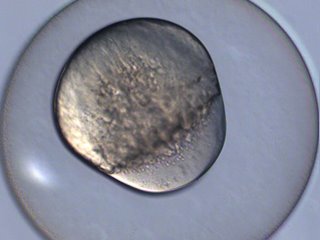
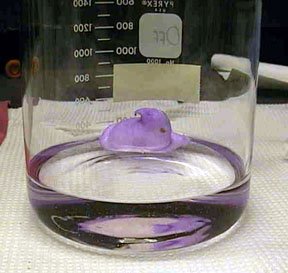
First, the peep was exposed to alcohol and did exhibit s
ome signs of inebriation, such as bumping into the walls of the swimming vessel:


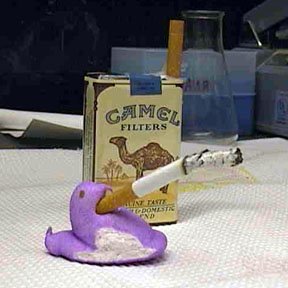
Then, the peep was permitted to select a brand of cigarette and smoked without apparent ill effects:


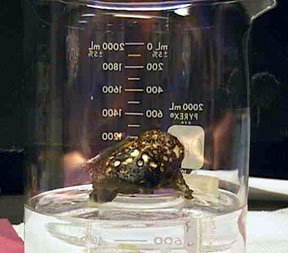
However, when smoking and alcohol were combined, the effects were catastrophic:

Their conclusions: "The synergistic effect of smoking and alcohol in Peeps produces a rapidly exothermic oxidation reaction, leading to a chemical and morphological divergence from the wild-type Peep phenotypes."

The marshmallow peep appears to be an excellent experimental model for the synergistic effects of smoking and alcohol!

Wednesday, April 12, 2006

Happy Passover--from the Jewish Humor Pages


A Jewish man took his Passover lunch to eat outside in the park. He sat down on a bench and began eating. Since Jews do not eat leavened bread during the eight day holiday, he was eating Matzoh, a flat crunchy unleavened bread that has dozens of perforations.

A little while later a blind man came by and sat down next to him. Feeling neighborly, the Jewish man passed a sheet of matzo to the blind man.

The blind man handled the matzo for a few minutes, looked puzzled, and finally exclaimed, "Who wrote this crap?"

And, just in time for this year, a group of leading scientists has published data indicating that seder participants should NOT partake of both chopped liver and charoses. It is indicated that this combination can lead to Charoses of the Liver.