Friday, April 18, 2008

Tuesday, April 01, 2008
Oldies But Goodies

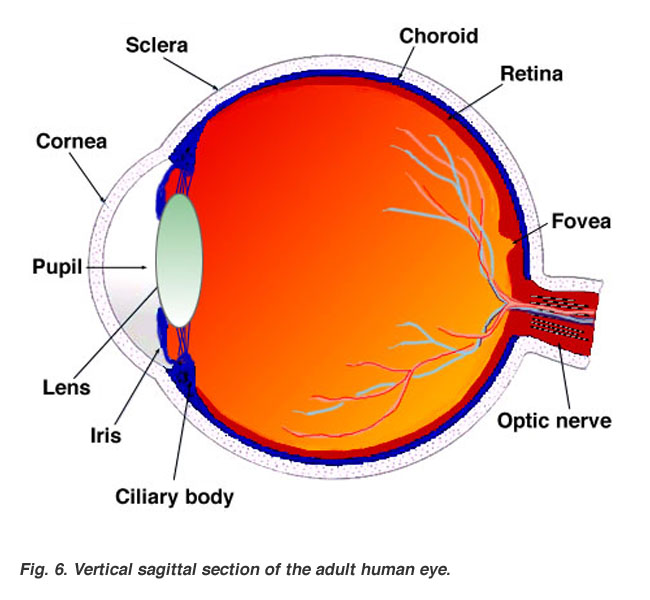
Cornea transplants are routine, with the highest success rates (97-99%) of any transplant procedure. In general, corneas for transplant are obtained from eyebank donors, aged 2-70. A recent study suggests that corneas from older donors may work as well as corneas from younger donors.
Some kinds of cornea damage and prior LASIK surgery disqualify corneas from being used as transplant material. As more and more people decide to undergo LASIK kinds of procedures, fewer corneas will qualify as transplant material. By increasing the potential donor age, it will help address potential shortages.
"We now have scientific evidence showing that older donors can be used reliably in corneal transplantation," said Dr. Edward Holland of the University of Cincinnati and one of the study's lead researchers.
The cornea is the clear covering for the front of the eye, crucial for helping it focus light. More than 39,000 corneal transplants were performed last year, according to the Eye Bank Association of America.
The nation has had an adequate supply so far. But specialists say there are international shortages, and eye banks fear U.S. supplies will tighten as a result of tougher Food and Drug Administration donor-safety rules that began last summer, increasing interest in older donors.
This is interesting in light of some of the research done in my own lab a few years ago, where we saw stem-like cells in corneas from 92-year old donors. It's amazing how the cornea is able to maintain its clarity and vitality throughout life....and even beyond.
Friday, March 21, 2008
Annual Marshmallow Peeps Post

I discovered this silly website a couple of years ago. It's still hysterical and especially appropriate for Easter week-end. It seems that some scientists (apparently with some time to kill in the lab) are conducting laboratory experiments on marshmallow peeps. They have an entire website devoted to their studies.
One particularly cute experiment was "the effect of alcohol and smoking on marshmallow peeps."
http://www.peepresearch.org/smoking.html
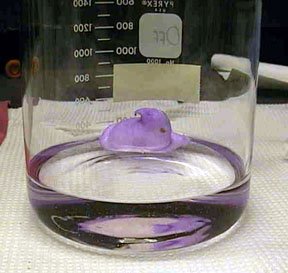
First, the peep was exposed to alcohol and did exhibit some signs of inebriation, such as bumping into the walls of the swimming vessel:
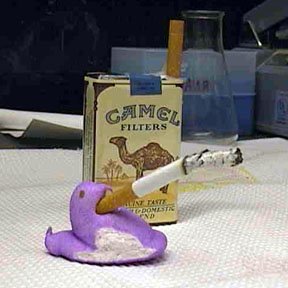
Then, the peep was permitted to select a brand of cigarette and smoked without apparent ill effects:
 However, when smoking and alcohol were combined, the effects were catastrophic: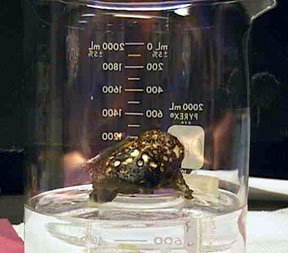
Their conclusions: "The synergistic effect of smoking and alcohol in Peeps produces a rapidly exothermic oxidation reaction, leading to a chemical and morphological divergence from the wild-type Peep phenotypes."
The marshmallow peep appears to be an excellent experimental model for the synergistic effects of smoking and alcohol!
Wednesday, March 05, 2008
Great News!!

Hey, guess what? I just found out that my research grant is going to be funded!! Yay! This is good news because I can finally hire some technical help for the stem cell lab and not be a volunteer anymore. It's time to celebrate!
The research project involves targeting "cancer stem cells" that seem to be the driving force behind tumor growth and resistance to chemotherapy.
Thursday, February 07, 2008
It's All Relative!

How many of you out there have blue eyes? If so, we're related!
A Danish scientist, Dr. Hans Eiberg, has conducted a study of blue-eyed people and found that there is a single mutation responsible for blue eye color. This mutation is very specific and has been found in every single blue-eyed person that they've studied. This "founder" mutation for blue eyes goes back to a common ancestor thousands of years ago. In other words, if you have blue eyes, you are likely related to everyone else in the world who also has blue eyes.
http://tinyurl.com/22gxvo
I hope you're all inviting me to your next family reunion!
Thursday, January 17, 2008
Vote for PlayPumps International!
For the next three days, you can vote online and support PlayPumps International:
PlayPumps International’s mission is help improve the lives of children and their families by providing easy access to clean drinking water, enhancing public health, and offering play equipment to millions across Africa. We provide schools and communities throughout Africa with an innovative, uniquely sustainable, free supply of clean drinking water. We strive to bring joy and play into the lives of African children, better health for millions, and to achieve the United Nations’ Millennium Development Goals. We will carry out our mission by installing 4,000 PlayPump water systems in 10 countries in sub-Saharan Africa by 2010, bringing the benefits of clean water to up to 10 million people. More than 950 PlayPump systems have already been installed in South Africa, Swaziland, Mozambique, and Zambia.
VOTE4CAUSE | Donate Through Voting
Wednesday, January 09, 2008
Everything You Always Wanted to Know About Stem Cells....
This is a long, but interesting presentation that explains stem cells.
Sunday, January 06, 2008
Clone, Clone on the Range

How do you feel about eating hamburgers from cloned cows?
Meat from cloned animals has been deemed no different than meat from non-cloned animals. Therefore, the FDA requires no special label for cloned meat.
So why clone animals?
The idea is to replicate the best livestock over and over again, to improve the quality of meat and milk products.
There are some who feel squeamish about cloning animals, worry about safety issues, and wonder whether cloned animals face increased danger from being wiped out by epidemics. Some want mandated labeling so that they will know whether or not their meat comes from cloned animals.
With the caveat of ensuring genetic diversity in animals to protect against epidemics, I am comfortable with cloned animals. On the grill, a steak from a cloned animal is indistinguishable from a steak from an uncloned animal. Twin cows are clones of one another. There is no inherent danger to humans in eating meat from twin cows, whether naturally-occurring or intentionally created.
Here is an interesting video from Wired Science that explains things in a bit more detail--
Sunday, December 16, 2007
Bird Flu

Eight suspected cases of bird flu have been reported in Pakistan, including five members of one family. One relative, who attended a funeral for one of the flu victims in Pakistan and returned to New York, developed flu-like symptoms and went into voluntary quarantine with his son. Tests for exposure to bird flu were negative for both father and son and they are no longer in quarantine. There is more detail on this story at Bloomberg.com
According to the World Health Organization, approximately 340 people in 13 countries have contracted bird flu since 2003. Sixty percent of the cases were fatal and most could be traced to direct contact with infected poultry. At this point, bird flu has not become a highly contagious, seasonal event. But we certainly need to keep tabs on it.
In April of this year, the Centers for Disease Control announced FDA approval for the first human bird flu vaccine against the H5N1 strain of the virus. According to the FDA:
The manufacturer, sanofi pasteur Inc., will not sell the vaccine commercially. Instead, the vaccine has been purchased by the federal government for inclusion within the National Stockpile for distribution by public health officials if needed.
"The threat of an influenza pandemic is, at present, one of the most significant public health issues our nation and world faces," said Andrew C. von Eschenbach, M.D., Commissioner of Food and Drugs. "The approval of this vaccine is an important step forward in our protection against a pandemic."
Wednesday, November 21, 2007
News On The Stem Cell Front

I'll bet many of you have read the latest news stories about how skin cells have been coaxed to behave like embryonic stem cells. This is a fascinating study and one that bears follow-up in the months/years ahead.
However, contrary to President Bush's recent comments, these findings do not eliminate the need for human embryonic stem cell research, nor will it end the stem cell debate. In order to prove that these new skin-derived stem cells are as good as, or better than, human embryonic stem cells, direct comparisons must be made between them under a variety of conditions. In order to make direct comparisons, all stem cell types are needed, embryonic and otherwise. To limit further study on skin-derived stem cells alone, it would never allow us to answer the question of which cell type might work best for diabetes, Parkinson's Disease, spinal cord injury, etc.
In no way does this minimize the significance of findings regarding skin-derived stem cells or stem cells derived from other tissue types. But I do think that it's important to ensure that stem cell researchers have access to a wide variety of cell types for future study, including human embryonic stem cells. Let's keep this issue at the forefront and encourage federal funding for all stem cell research.
Friday, November 02, 2007
R.I.P Washoe

Washoe the chimp died on Oct. 30th at the age of 42. She was the first non-human to learn American Sign Language (ASL). She was named for Washoe county, Nevada, where she was raised and trained in ASL. At the time of her death, she resided at Central Washington University.
There was controversy about the project and the claims that Washoe could use 250 ASL signs. Still, the project was groundbreaking in the field of animal communications. Washoe eventually passed on her knowledge of ASL to her adopted son Loulis.
R.I.P. Washoe.
Wednesday, October 10, 2007
Happy Birthday...Have a Nobel Prize!

It was a great birthday for Gerhardt Ertl. He turned 71 today and was awarded the Nobel Prize in chemistry. His award-winning research involved "surface chemistry", vital to the development of the catalytic converter, and our understanding of the vanishing ozone layer.
Professor Ertl spoke at a live press conference today, "It is the best birthday present that you can give somebody. I was really speechless."
Happy Birthday, Professor Ertl!
Sunday, September 30, 2007
Breast Cancer Walk-- A Success!

I participated in today's "Making Strides for Breast Cancer" walk to benefit the American Cancer Society. You can see from the photo that we had perfect weather for the event. I walked the 3 mile route with a group of about 14 team members, including a couple of toddlers in a stroller. Altogether, there were about 9,000 people who took part in our local walk.
Many thanks to all who sponsored me. I ended up raising over $700 for a very worthy cause.
Tuesday, September 18, 2007
Eye on Climate Change

There is an excellent website with scientific information on global warming:
www.nature.com/reports/climatechange
You'll find a journal club, a blog and a free digital issue of "Nature Reports Climate Change".
Check it out!
Sunday, September 16, 2007

Monday, September 10, 2007
In Memoriam: Elizabeth Olmsted

From the Buffalo News Obituary:
I had the great pleasure to know Dr. Olmsted. She once told me that when she started out as the first female Ophthalmology resident at the University of Rochester, the male residents refused to sit at the lunch table with her. Eventually, she won them over. She was truly a pioneer in the field.March 5, 1915 — Sept. 6, 2007
Dr. Elizabeth Pierce Olmsted, a pioneer for women in medicine, died Thursday in Millard Fillmore Hospital. She was 92.
She graduated from the University of Buffalo School of Medicine in 1939, becoming Western New York’s first female ophthalmologist.
Throughout her career, she also worked as a military consultant investigating the effects of radar exposure on the eye, invented the diffraction lens used in the treatment of crossed and lazy eyes, authored numerous articles and served as president and chairwoman of local and state professional societies.
Dr. Olmsted was one of the area’s first female pilots, serving as a lieutenant in the Civil Air Patrol in the early 1940s. She was a member of the Ninety- Nines, the international organization of female pilots.
Her husband, Ira G. Ross, died in 1991.
A lifelong Buffalo resident and civic leader, she volunteered for several local organizations. Of all her accomplishments, she is perhaps best known for philanthropy.
Throughout the 1990s, Dr. Olmsted contributed millions of dollars to the UB School of Medicine and Biomedical Sciences to establish a faculty chair in medical information services and to establish the Ira G. Ross Eye Institute. She also donated to the Blind Association of Western New York, renamed in her honor the Elizabeth Pierce Olmsted, M.D. Center for the Visually Impaired, to update its facility to state-of-the-art.
In recognition of her generosity, Dr. Olmsted in 2004 received the Outstanding Philanthropist Award from the Association of Fundraising Professionals.
She also received the National Conference for Community and Justice of Western New York Lifetime Achievement Award, the Athena Award, UB’s Distinguished Medical Alumna Award and many other honors. In 2003, she received an honorary doctorate in science from the State University of New York.
Saturday, September 01, 2007

Friday, August 17, 2007
Breast Cancer Walk

This year, I'll be participating in the "Making Strides Against Breast Cancer" event of the American Cancer Society. Our local walk will be at the end of September. I'm dedicating this walk to the memories of my cousin and my aunt who bravely fought breast cancer during their lives, and in honor of surviving relatives and friends who are an inspiration to us all.
For more information about participating in your area, here is a link to the event:
http://makingstrides.acsevents.org
If anyone would like to sponsor my walk, please send an e-mail to eyedoc333@hotmail.com and I'll send you the link to my donations page.
Saturday, August 11, 2007
African Webcam

There's a very interesting page on the National Geographic website called "Pete's Pond". It's a link to a live webcam of Mashatu Game Reserve in Botswana, Africa. At various times of the day, you can see elephants, snakes, lizards, birds, and lions. The sounds of chirping insects and splashing water are very relaxing.
Edit: The tinyurl link isn't working. I'll put it in the comments section, if I can.
Hat tip to Jillan.
Thursday, July 26, 2007
A Stem Cell Milestone in New York!
This is a press release from Gov. Spitzer's website.
Yours truly will apply for funding as soon as the grants become available!
Yours truly will apply for funding as soon as the grants become available!
FOR IMMEDIATE RELEASE:
July 26, 2007
GOVERNOR SPITZER ANNOUNCES APPOINTMENTS TO EMPIRE STATE STEM CELL BOARD
Board to Oversee $600 Million in Funding for Stem Cell Research
Governor Eliot Spitzer today named 11 appointees to serve on the committees that form the Empire State Stem Cell Board. The Board was established to oversee and administer $600 million in funding for the Empire State Stem Cell Trust Fund to promote stem cell research and development.
“The Empire State Stem Cell Trust Fund propels New York State forward in the search for scientific knowledge and advancement, and will enable the world-class academic, research, medical and scientific institutions located here to reach their full potential,” said Governor Spitzer. “The individuals that we are nominating to the Empire Stem Cell Board will help bring thoughtful leadership, scientific expertise, and ethical considerations to the advancement of stem cell research.”
The 2007-2008 Enacted Budget includes an initial appropriation of $100 million and an additional $500 million is provided at $50 million per year for ten years beginning in April 2008. The Fund will make grants for basic, applied, translational and other research that advances scientific discoveries in fields related to stem cell biology. No grants are allowed for any research involving human reproductive cloning.
Lieutenant Governor David A. Paterson said: “New York is responding to the urgent need for a state-sponsored, fully-funded stem cell research program. The appointed members of the Empire State Stem Cell Board represent the best leadership our State has to offer in the stem cell research field. This board will execute our stem cell research program with the highest moral, ethical, and scientific standards. It will play a key role in advancing medical science, bringing hope to people suffering a range of debilitating illnesses. I am proud that we are able to deliver our stem cell program to the people of this state, and I am personally committed to seeing its full, successful implementation. ”
Commissioner of Health Richard F. Daines, M.D. said: "Biomedical research holds great promise for the presentation and treatment of the most devastating diseases and health conditions. Governor Spitzer and Lieutenant Governor Paterson's support for this initiative will position New York as a leader in stem cell research, and will expand the number of New York scientists contributing to this promising field. The caliber of the Empire State Stem Cell Board members is outstanding, and we look forward to working with them.”
The Board includes two committees – the Funding Committee and Ethics Committee – each consisting of 13 members. The Stem Cell Board will be chaired by the Commissioner of Health, Richard F. Daines, M.D. who will also act as a member on each committee. Twelve members are appointed by the Governor with six of those members recommended by legislative leaders. The Funding Committee will make recommendations for the awarding of grants to the Commissioner of Health based upon the analysis and recommendations of an independent scientific peer review process. The Ethics Committee will make recommendations regarding scientific, medical and ethical standards.
Subscribe to:
Posts (Atom)