Saturday, November 25, 2006

More Not-So-Correct Predictions


"So many centuries after the Creation, it is unlikely that anyone could find hitherto unknown lands of any value."
Spanish Royal Commission, rejecting Christopher Columbus' proposal to sail west.

"You're planning to make a ship sail against wind and tide by lighting a fire below deck?? I don't have time to listen to that kind of nonsense!"
Napoleon, about Robert Fultons plans to make a Steamboat.

"I believe in the horse. The automobile is merely a passing phenomonon."
Emperor Wilhelm II

"Airplanes suffers from so many technical faults that it is only a matter of time before any reasonable man realizes that they are useless!"
Scientific American (1910)


"Everything that can be invented has been invented."

Attributed to Charles H. Duell, Commissioner, U.S. Office of Patents, 1899.


Hat tip to
http://www.rudyh.org/index.htm

Friday, November 17, 2006

Family Planning?


How can we have a new chief of "Family Planning" at the Department of Health and Human Services who doesn't believe in family planning? From the Washington Post:


The Bush administration has appointed a new chief of family-planning programs at the Department of Health and Human Services who worked at a Christian pregnancy-counseling organization that regards the distribution of contraceptives as "demeaning to women."

Eric Keroack, medical director for A Woman's Concern, a nonprofit group based in Dorchester, Mass., will become deputy assistant secretary for population affairs in the next two weeks, department spokeswoman Christina Pearson said yesterday.

Keroack, an obstetrician-gynecologist, will advise Secretary Mike Leavitt on matters such as reproductive health and adolescent pregnancy. He will oversee $283 million in annual family-planning grants that, according to HHS, are "designed to provide access to contraceptive supplies and information to all who want and need them with priority given to low-income persons."

The appointment, which does not require Senate confirmation, was the latest provocative personnel move by the White House since Democrats won control of Congress in this month's midterm elections. President Bush last week pushed the Senate to confirm John R. Bolton as ambassador to the United Nations and this week renominated six candidates for appellate court judgeships who have previously been blocked by lawmakers. Democrats said the moves belie Bush's post-election promises of bipartisanship.

The Keroack appointment angered many family-planning advocates, who noted that A Woman's Concern supports sexual abstinence until marriage, opposes contraception and does not distribute information promoting birth control at its six centers in eastern Massachusetts.

"A Woman's Concern is persuaded that the crass commercialization and distribution of birth control is demeaning to women, degrading of human sexuality and adverse to human health and happiness," the group's Web site says.

Wednesday, November 08, 2006

A Great Day for Stem Cell Research in Missouri!


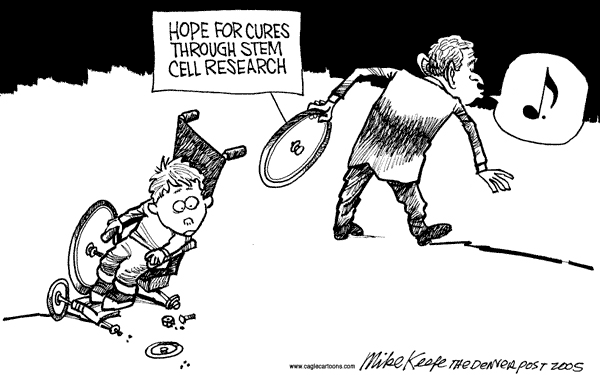
In the aftermath of the Democratic wave yesterday, I wanted to make special mention of the great news from Missouri. Not only did Claire McCaskill (D) win a senate seat, but the citizens of Missouri have voted in favor of Amendment 2, which will strengthen and promote human embryonic stem cell research in the Show-Me state! Rock on Missouri!


I lift a glass of lemonade in celebration!

Thursday, November 02, 2006

Interior Design


I received this e-mail from the Union of Concerned Scientists. It looks like another case of Bush appointees at the Department of the Interior redesigning science to suit their needs.


Dear Eyedoc,


On Monday, the Washington Post reported that high-ranking political appointees within the Department of the Interior have rewritten numerous scientific documents to prevent the protection of several highly imperiled species under the Endangered Species Act....

This latest example of the abuse of science centers on the U.S. Fish and Wildlife Service (FWS). Assistant Secretary for Fish and Wildlife and Parks Julie MacDonald, a civil engineer with no biological training, personally changed scientific conclusions and ordered the agency to refrain from protecting several species under the Endangered Species Act. The Endangered Species Act requires the FWS to use the best available science when making decisions regarding what species should be protected under the Act. The documents showing MacDonald's edits and edicts were obtained by several conservation organizations through the Freedom of Information Act. The Union of Concerned Scientists (UCS) brought the documents to the Washington Post in the context of the greater issue of political interference in science.

*snip*

Wednesday, November 01, 2006

Thanks, Vesti!


I did a radio interview the other day on stem cell research, in response to the recent flap over Rush Limbaugh's shameful comments about Michael J. Fox's ads for political candidates who support stem cell research.

My cyberpal Vesti has posted a thread about this, so I refer you all to his website for your comments. Goodness knows he can use the traffic. [wink]

http://www.hetstence.com/blog/vestiblog/

If you're too lazy to click on the link, I'd be interested to hear your comments about the fallout here.

Saturday, October 21, 2006

Berry Good For Your Brain


The latest research from the Salk Institute shows that fisetin, a chemical found in strawberries and other fruits and vegetables, can stimulate long-term memory pathways in mice. This is interesting in terms of the potential for fisetin in memory enhancement in dementia and Alzheimer's Disease. From Science Daily:
Besides strawberries, fisetin is found in tomatoes, onions, oranges, apples, peaches, grapes, kiwifruit and persimmons. While eating strawberries sounds like an enjoyable alternative to popping a pill, Maher [the lead author] cautions that it would take about 10 pounds a day to achieve a beneficial effect, which might prove too much even for the most avid strawberry lovers.

Saturday, October 14, 2006

Rules of the Lab


1. When you don't know what you're doing, do it neatly.

2. Experiments must be reproducible, they should fail the same way each time.

3. First draw your curves, then plot your data.

4. Experience is directly proportional to equipment ruined.

5. A record of data is essential, it shows you were working.

6. To study a subject best, understand it thoroughly before you start.

7. To do a lab really well, have your report done well in advance.

8. If you can't get the answer in the usual manner, start at the answer and derive the question.

9. If that doesn't work, start at both ends and try to find a common middle.

10. In case of doubt, make it sound convincing.

11. Do not believe in miracles---rely on them.

12. Team work is essential. It allows you to blame someone else.

13. All unmarked beakers contain fast-acting, extremely toxic poisons.

14. Any delicate and expensive piece of glassware will break before any use can be made of it. (Law of Spontaneous Fission).


hat tip to http://chem.ch.huji.ac.il/~eugeniik/humor.htm

Wednesday, October 04, 2006

Modified Human Embryonic Stem Cells Can Preserve Visual Function


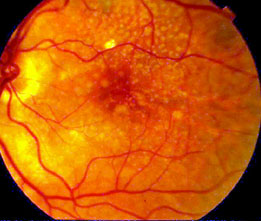
Age-related macular degeneration (AMD) is a blinding disease of the
retina affecting 1.75 million Americans (1). Vision loss in AMD occurs due to the death of light-sensing cells in the central part of the retina, the area of highest visual sensitivity. In order to test new treatments before trying them in humans, an "RCS rat" was developed by the Royal College of Surgeons (RCS) that undergoes retinal cell death and visual loss that, in some ways, resembles retinal diseases seen in humans.

In a study led by Dr. Raymond Lund's group at the Moran Eye Center in
Utah (2), human embryonic stem cells were modified to become specialized retinal pigment epithelial (RPE) cells. These RPE cells were injected into the eyes of RCS rats at an early age, prior to the onset of disease, to see if they could prevent the death of retinal cells over time. For comparison, a control group of RCS rats received an injection of liquid that did not contain RPE cells.

Two weeks after the injections, all groups of animals were tested for
their ability to react to light and generate the electrical signals that indicate processing of visual information. RCS rats receiving RPE injections were better able to detect and process light signals in the retina than were control RCS rats. The cellular structure of the rats' eyes was examined under a microscope. Animals that received RPE injections had fewer retinal cells die over the course of the experiment than control RCS rats. Further analysis showed that the injected human RPE cells partially prevented the death of the rats' own retinal cells. In summary, it appears that human embryonic stem cells may hold promise for new treatment strategies that target blinding retinal diseases such as macular degeneration.

1) http://www.nei.nih.gov/eyedata/pbd4.asp
2)
http://www.liebertpub.com/publication.aspx?pub_id=9

Monday, September 25, 2006

We Interrupt This Blog...


Q. What does DNA stand for?
A. National Dyslexics Association


Hat tip to http://www.jupiterscientific.org

Tuesday, September 19, 2006

Listeria Hysteria


OK, you keep hearing the scary headline about how "viruses" are being used to treat foods in order to kill bacteria that can cause food-borne illness. I wish reporters would stop using the word "virus". Although technically correct, it's causing unnecessary concern.

Let's back up a bit. Listeria Monocytogenes can cause serious bacterial illness in humans, characterized by nausea, vomiting and diarrhea. Each year, there are about 2500 cases of "Listeriosis" in the US, resulting in about 500 deaths. A new approach is being taken as a means to reduce the incidence of Listeriosis. It involves a "bacteriophage", an organism that infects and kills bacteria. Technically, bacteriophages fall within the general category of "viruses", but are incapable of infecting humans.

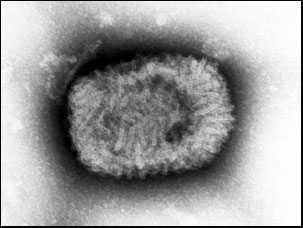
Recently, a bacteriophage has been designed to infect Listeria through thread-like structures called "flagella" (see photo above). Humans have never had and never will have flagella that could be mistaken for Listeria's appendages. The bacteriophage is made specifically to target Listeria, so as not to harm the "good" bacteria that inhabit our digective tracts. I'm hoping that as the correct information comes to light, people will be less leery of this new approach to food safety.

Thursday, September 14, 2006

Let's Get Outta This Joint!


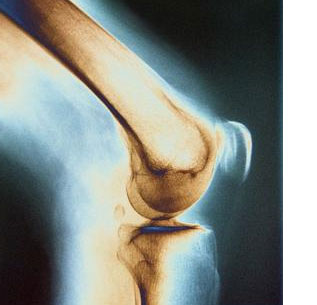
Scientists are exploring new stem cell treatments to promote cartilage repair in damaged knees. The cartilage-like meniscus, the knee's shock absorber, is commonly damaged through sports injuries and arthritic disease. Approximately 800,000 people per year in the US have surgery to remove all or part of the meniscus. Fifty-five of these patients are now enrolled in a two-year study at the University of Southern California to determine whether an injection of bone-marrow stem cells can stimulate repair of the meniscus.

Eligible patients, aged 18-60, were enrolled prior to knee surgery.
One week after surgery, some patients received a single injection of Chondrogen (a commercial preparation of adult bone marrow stem cells), whereas others received a placebo injection that contained no stem cells. Knees with and without stem cell treatment were examined by MRI (Magnetic Resonance Imaging) to check for meniscus regrowth over time.

This is a double-blind study, meaning that neither the patients nor their doctors will know which injections contained Chondrogen or a placebo until later in the study. The double-blind strategy encourages unbiased interpretation of the results. Early results of the study, funded by Osiris Therapeutics, are expected out in October 2006.

Saturday, September 09, 2006

Immunity Challenge


  • "[It] is a judgment of God, sent to punish and humble our sins; and what shall we so evade it, and think to turn it away from us?...God has predetermin'd and fixed the period of every ones life...so that if this time be come inoculation will not save the person's life."
  • "[It is] a judgment on the sins of the people...to avert it is but to provoke him more".
  • "[It is] an encroachment on the prerogatives of Jehovah", who has the right "to wound and smite".

Do these religious statements sound familiar? I thought so. It turns out that they were spoken by theologians almost 300 years ago in opposition to smallpox innoculation.

An intriguing method of preventing smallpox was being studied to see if material taken from cowpox sores or even smallpox lesions could be used prevent the deadly smallpox disease. Then, just as now, religious zealots tried to impose their own morality on disease; it was a punishment from G-d. To interfere with this punishment, would cause further anguish and death. It took a smallpox epidemic in Montreal to cause a shift in attitude:

In 1885 a smallpox epidemic broke out in Montreal, Canada. Almost everyone was vaccinated except the Catholic population there. When the authorities tried to force vaccination on their Catholic citizens, they were met with opposition that threatened to become violent. Rather than explaining to their parishioners the benefits of vaccination, the catholic clergy tolerated and in some cases even encouraged the behavior of the laity. A priest of St. James Church said in a sermon that, "if we are afflicted with smallpox, it is because we had a carnival last year, feasting with the flesh, which has offended the Lord;...it is to punish our pride that God has sent us smallpox." One religious newspaper even went further, telling the Montreal Catholics to take up arms rather than submit themselves to vaccination. Instead the catholic ecclesiastical authorities in the city called on their people to make certain devotional exercises, to hold a procession with an appeal to the Blessed Virgin and to use the rosary as specified. Needless to say the Catholic population in Montreal suffered many needless deaths from smallpox until the proper measure was finally enforced.

We see this same kind of opposition pattern today in the case of a human papilloma virus vaccine, designed to prevent cervical cancer. Vaccine opponents fear that innoculation will lead to sexual promiscuity. We hear others define AIDS as a punishment for sin. I long for the day when disease is seen by all as a bane of biology rather than measure of morality.

Wednesday, September 06, 2006

Vote for "Science Idol"


The Union of Concerned Scientists has a cartoon contest. All 12 of the finalists will be featured in a 2007 calendar. Vote for your favorite cartoon here:

http://ucsaction.org/campaign/vote_now_for_science_idol

Saturday, August 26, 2006

Fighting Terror at Home


Dear Eyedoc333,

A terrorist group called the Animal Liberation Front (ALF) recently took credit for driving a UCLA scientist to leave behind his research employing non-human primates. Like many others in the biomedical research community, this scientist and his family were terrorized at their home for months.

Acts of violence, intimidation, and harassment against researchers have a chilling effect on animal research everywhere. As such, passage of the Animal Enterprise Terrorism Act is more critical now than ever. This legislation would allow federal authorities to help prevent, better investigate, and prosecute individuals who seek to halt biomedical research through acts of intimidation, harassment, and violence.

Visit CapWiz, an on-line legislative action center, provided to you by the Society for Neuroscience: http://capwiz.com/sfn/home/
(apologies--for some reason the link doesn't seem to work!)

Thank you in advance for your participation!

Wednesday, August 23, 2006

Stem Cells: Try, Try Again


There's a new method for creating human embryonic stem cell lines that involves removal of one single cell from a human embryo. The hope was that this method would overcome the objections of the "life begins at conception" crowd by creating new stem cell lines without harming the embryo from which they were derived. Unfortunately, there are continued objections:

"It is widely believed that one cell of a very early embryo may separate and become a new embryo, an identical twin," said Richard Doerflinger of the U.S. Conference of Catholic Bishops.

For this reason, the possibility of an identical twin being able to form from the single cell removed from the original embryo, the new method is still objectionable to the hard-liners. It is unclear whether the new method will be eligible for federal research funding. Don't hold your breath...

Tuesday, August 22, 2006

Filling In


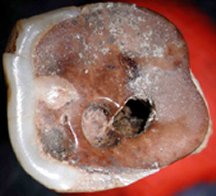
Above, you see an image of "cutting edge" dental work, accomplished without anaesthetic or even dental insurance! This is a 7-9,000 year old human tooth that shows signs of drilling with sharpened points of flint. In a village called Mehrhgarh, in present-day Pakistan, ancient villagers underwent these dental procedures in teeth that, half the time, had no apparent signs of decay (whereas some teeth did have cavities). It is unknown whether any sort of filling was used to protect sensitive areas. The drilling was not thought to be for decorative purposes, since none of the holes were located in visible locations at the front of the mouth.

Could it be....PULP fiction?

Tuesday, August 15, 2006

Not-so Accurate Predictions...


"Computers in the future may weigh no more than 1.5 tons."

--Popular Mechanics, 1949

"I think there is a world market for maybe five computers."
--Thomas Watson, chairman of IBM, 1943

"Heavier-than-air flying machines are impossible."
--Lord Kelvin, president, Royal Society, 1895.

"Louis Pasteur's theory of germs is ridiculous fiction".
--Pierre Pachet, Professor of Physiology at Toulouse, 1872


"But what ... is it good for?
--Engineer at IBM, 1968

commenting on the microchip.

"640K ought to be enough for anybody."
--Bill Gates, 1981


"There is no reason anyone would want a computer
in their home."

--Ken Olson, president, chairman and founder
of Digital
Equipment Corp., 1977

"This 'telephone' has too many shortcomings to be
seriously
considered as a means of communication.
The device is inherently
of no value to us."
--Western Union internal memo, 1876.

"The wireless music box has no imaginable
commercial value. Who
would pay for a message
sent to nobody in particular?"

--David Sarnoff's associates in response
to his urgings for
investment in the radio in the 1920s.

"The concept is interesting and well-formed,
but in order to earn
better than a 'C,'
the idea must be feasible."

--A Yale University management professor
in response to Fred
Smith's paper proposing
reliable overnight delivery service.

(Smith went on to found Federal Express Corp.)

"Who the hell wants to hear actors talk?"
--H.M. Warner, Warner Brothers, 1927.

Wednesday, August 09, 2006

Quit Bugging Me!


Morgellon's Disease is described by patients as the appearance of multi-colored fibers on the skin, accompanied by the sensation of crawling bugs. There is a debate as to the nature of this disease. Some physicians feel that it is "delusional parasitosis", in which patients imagine that bugs are crawling on them. Biopsies of skin lesions do not show any known pathogens, yet 90% of these patients test positively for the bacterium that causes Lyme Disease. Antibiotic treatment and even the antipsychotic drug Risperidone have been used, with some measure of relief. Yet, the underlying cause of this disease remains unknown.

Friday, August 04, 2006

Super-Size Me!


The amount of food you eat in a serving seems to be linked to the size of your eating utensils. A group of nutritionists received invitations to an ice cream social and were not told that they were to be part of an experiment on food serving size. They were given different sized spoons and bowls and then asked to serve themselves. The results were intriguing....

...Researchers believe their findings result from the human perceptual tendency to judge object sizes based on comparisons with neighboring items. Participants in the study, for example, served themselves 31 percent more ice cream when they were given a 34-ounce bowl instead of a 17-ounce bowl. Their servings increased by 14.5 percent when they were given a 3-ounce spoon instead of a 2-ounce utensil. When given both a large spoon and big bowl, they served themselves 56.8 percent more. Yet they were unaware of the greater ice cream quantities.


This study comes from the Georgia Institute of Technology and will appear in the September issue of the American Journal of Preventive Medicine.

Sunday, July 30, 2006

The Blink of an Eye


Latest studies show that the retina can transmit signals to the brain as fast as an ethernet connection! It seems that the human retina can transmit visual data at approximately 10 million bits per second. In comparison, an ethernet connection can transmit information between computers at speeds of 10 to 100 million bits per second. Study co-authors are McLean and Freed from Penn and Segev and Berry from Princeton. This research was supported by grants from the National Institutes of Health and the National Science Foundation.